Your cart (0)
Your cart (0)
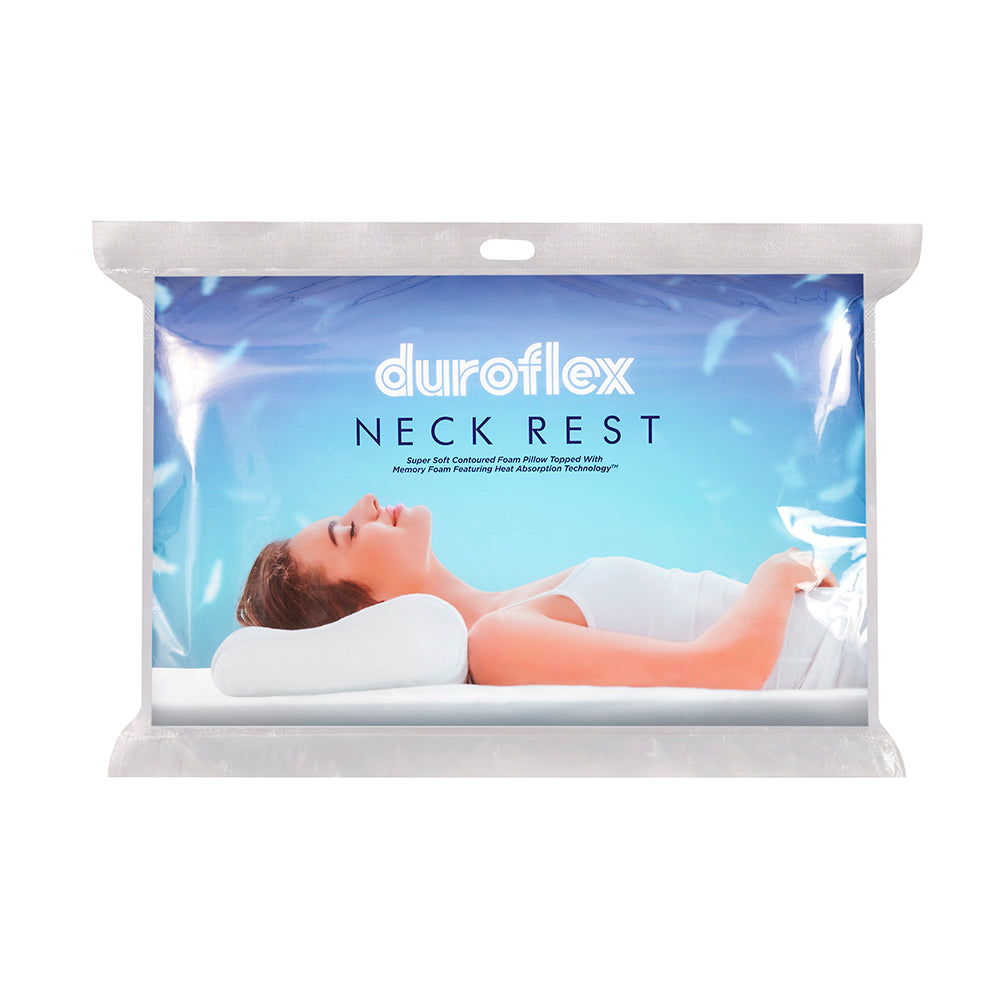
Neck Rest Orthopedic Memory Foam
Core balance Pillow
Spine Contour Pillow
Dual Support Pillow
A memory foam pillow works differently from a regular fibre pillow. Instead of simply cushioning your head, the foam responds to weight and warmth, holding the shape of your head and neck through the night. That is why memory foam is usually the first thing people look at when their current pillow feels either too flat by morning or too high to sleep comfortably on.
The Duroflex memory foam pillow collection currently lists four options: Neck Rest Orthopedic Memory Foam, Core Balance, Spine Contour and Dual Support. Each one is built around a slightly different height and shape, so the right pick depends less on the material and more on how you actually sleep. If you want to see how these sit against everyday options, the full pillows range covers every category Duroflex makes.
Memory foam is a pressure-responsive material. It compresses under the heavier parts of your head and stays firmer where less weight is applied, which is what creates the cradling feel people describe. A fibre pillow, by comparison, redistributes its filling every time you move, which is why it needs constant fluffing and why the height you started the night with rarely lasts until morning.
That difference matters most at the neck. A contoured foam pillow keeps a defined shape under the cervical curve rather than collapsing flat, and that is the reason foam is so commonly recommended for people who wake up with a stiff neck or tight shoulders. The support is not just softer or firmer, it is placed differently. The wider neck pillow range covers both foam and fibre if you want to compare the two approaches side by side before committing.
The trade-off is felt. Foam is denser and more structured than fibre, so the first few nights can feel unfamiliar if you have slept on a soft pillow for years. Most people adjust within a week, but it is worth knowing going in.
The reason foam has become the default choice for support-focused sleepers comes down to a handful of practical differences that show up night after night.
If your main reason for switching is discomfort rather than general comfort, the pillow for neck pain ranges the options built specifically around that requirement.
There is no single best memory foam pillow that works for every sleeper. Height and firmness need to match the gap between your head and the mattress, and that gap changes depending on the position you sleep in. Getting this wrong is the most common reason a good pillow feels uncomfortable.
For side sleepers
Side sleeping creates the widest gap between head and mattress because the shoulder takes up space underneath you. A taller, firmer pillow that holds its height is usually the better fit, since anything that compresses too easily will let your head drop toward the mattress and bend your neck downward. The Spine Contour Pillow is listed with better neck alignment, cooling and breathable construction, which suits sleepers who want a defined contour rather than a soft surface.
For back sleepers
Back sleepers need noticeably less lift. Too much height pushes the chin toward the chest, which is one of the most common causes of morning neck stiffness and something people rarely connect back to their pillow. A medium-height contoured design tends to work better here. The Neck Rest Orthopedic Memory Foam pillow is built with contoured orthopedic support, dual height, pressure relief, a 100% cotton fabric cover and a 1-year warranty, so you can use the lower side of the pillow if the higher profile feels like too much.
For combination sleepers
If you shift between your back and your side through the night, a pillow tuned for one position alone will feel wrong for half the time you are on it. The Dual Support Pillow is listed with better neck alignment, cooling and breathability, making it worth considering when you want a single pillow that works in more than one position without needing to be flipped or folded.
For sleepers who want an all-round option
If you are not sure which category you fall into, or you share the pillow, the Core Balance Pillow sits in the middle of the range with the same cooling and neck alignment features. It is the most forgiving starting point of the four.
Four models are currently listed in this collection:
All four are structured pillows rather than soft everyday ones, so the choice comes down to height and contour rather than firmness alone.
When you buy a memory foam pillow online, the temptation is to sort by discount and pick whatever looks softest in the photos. Support is hard to judge from an image, so it helps to work through a short list of checks instead.
For elevation-based support rather than head and neck support, the wedge pillow range is a separate category worth a look.
Your pillow decides the angle your neck holds for six to eight hours a night. If it sits too high, the neck bends forward. Too low, and the head drops back. Either way, the muscles around the neck and shoulders spend the night working instead of resting, which is often what people are describing when they say they woke up stiff for no obvious reason.
A well-matched pillow keeps the head roughly level with the spine. Contoured memory foam helps here because the shape does the work rather than relying on you to position the pillow correctly each night. The Duroflex orthopedic pillow range brings together the models designed around this kind of structured support.
That said, a pillow is a comfort product and not a medical device. If you have persistent or severe neck pain, see a qualified healthcare professional rather than treating a pillow as the fix.
Memory foam needs different handling from fibre. The single most important rule is that the foam core should never go into a washing machine, even when the outer cover is removable and machine washable. Water breaks the foam structure down and it does not recover once that happens.
Follow the care instructions supplied with your specific pillow. Use a pillowcase and wash it regularly, keep the pillow ventilated, and air it out occasionally rather than leaving it permanently covered. Spot clean the foam only where needed and let it dry completely before using it again.
Check the pillow every few months. If it stays compressed after you lift your head, or no longer returns to its original shape, the foam has reached the end of its useful life and it is time to replace it.
Start with how you sleep, not with the product list. Side sleepers generally want more height and a firmer contour. Back sleepers usually do better with a lower profile. If you move around at night, a dual-purpose design saves you from compromising in one position or the other.
From there, narrow down on contour shape, cooling and warranty. With Neck Rest Orthopedic Memory Foam, Core Balance, Spine Contour and Dual Support in the range, there is a version of memory foam support for most sleeping styles.



Sign up to get early access, limited drops & insider updates.


Someone sent you


